Pay Per Meet: The Rise of Transactional Dating in a Burned-Out Economy
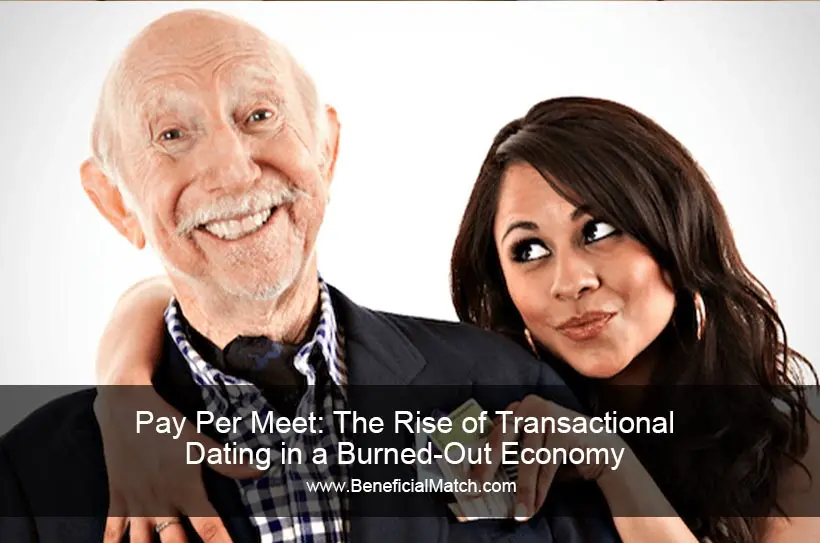
The $200 Dinner Date
Last month, a 29-year-old software engineer in San Francisco did something that would have seemed unusual just a decade ago. Instead of swiping through endless profiles, sending opening messages, and navigating the emotional labor of small talk, he opened an app called WhatsYourPrice. Within an hour, he had arranged a dinner date for the following evening. The price: $200 for three hours of her time. No expectation of a second date. No ambiguity about who pays. Just a clear, upfront transaction: pay per meet.
He is not a wealthy outlier, nor is he seeking anything explicitly sexual. He simply values his time more than his money, and he has grown exhausted by the uncertainty of traditional dating. He is part of a quiet but growing movement that is reshaping how some people think about companionship, intimacy, and the very definition of a date.
Welcome to the era of Pay Per Meet.
What Exactly Is Pay Per Meet?
At its simplest, Pay Per Meet (PPM) is an arrangement in which one person compensates another for a specific, time-bound social interaction. This might be dinner, a movie, a walk in the park, or attending a concert together. Crucially, PPM is distinct from both traditional dating and sugar relationships.
| Traditional Dating | Sugar Dating (Allowance-based) | Pay Per Meet |
|---|---|---|
| Emotional investment expected | Ongoing arrangement | No commitment beyond one meeting |
| No direct payment | Monthly or weekly allowance | Paid per individual date |
| Ambiguous intentions | Clearly transactional but relational | Transparent, purely time-based exchange |
| Long-term potential expected | Usually includes intimacy | May or may not include intimacy (varies) |
PPM removes the pretense. Both parties know exactly what they are getting: one receives money, the other receives companionship without obligation. Platforms like Seeking (formerly SeekingArrangement) and WhatsYourPrice have formalized this model, allowing users to bid on dates or set explicit expectations before meeting.
Why Is PPM Rising Now? Four Key Drivers
The growth of Pay Per Meet is not happening in a vacuum. It is a logical response to several overlapping cultural and economic trends.
1. Time Poverty
In high-cost urban centers, professionals are working longer hours than ever. A 2023 survey by the Bureau of Labor Statistics found that among college-educated workers aged 25–40, nearly one-third regularly work more than 50 hours per week. For these individuals, the multi-hour investment of swiping, chatting, and going on several low-quality dates feels like a poor return on time. Paying $150–$300 for a guaranteed, pleasant evening with an attractive companion becomes a rational economic choice: buy time, save emotional energy.
2. Emotional Burnout
"Dating fatigue" is real. Psychologists have noted a rise in what they call "anticipatory emotional labor" — the mental energy spent preparing for potential rejection, ghosting, or disappointment. PPM offers a hedge against that risk. There is no anxiety about whether he will call. There is no confusion about who is paying. The boundaries are drawn in cash, not in vague texts. For many, this clarity is liberating rather than cold.
3. Economic Pressure on the Supply Side
While the demand for PPM comes from mostly male professionals, the supply often comes from young women (and some men) facing economic precarity. Student debt, rising rent, and stagnant entry-level wages make a $200 dinner date an appealing side hustle. A 2024 informal analysis of Seeking profiles found that 68% of new female users cited "financial flexibility" or "tuition help" as their primary motivation. For them, PPM is not about luxury — it's about making ends meet without committing to a full sugar arrangement or sex work.
4. Platform Normalization
WhatsYourPrice, founded by the same entrepreneur behind the controversial dating site Seeking, has made PPM its explicit business model. Users create profiles, state their "price for a first date," and accept or decline offers. The platform processes payments and takes a cut. By formalizing the transaction, these apps strip away the taboo. When an app tells you it's normal, many people believe it.
The Case for Pay Per Meet: Why Some Defend It
Supporters of PPM argue that it is simply an honest form of exchange in an otherwise dishonest dating culture.
- Transparency: There is no manipulation, no false promises of commitment, no "breadcrumbing." Both parties agree on terms upfront.
- Efficiency: For busy professionals, PPM delivers exactly what they want: a pleasant, low-stakes social interaction without the overhead of relationship management.
- Accessibility: For individuals with social anxiety, physical disabilities, or unconventional schedules, PPM provides a reliable way to experience companionship that might otherwise be out of reach.
- Autonomy: No one is coerced. Both parties are adults making voluntary choices. In a free society, why should two consenting people not trade money for time?
The Criticisms and Ethical Gray Areas
Of course, PPM is not without its detractors — and serious concerns.
Blurring the Line with Sex Work
The most obvious criticism is that PPM is often a euphemism for prostitution. While many PPM arrangements explicitly exclude sex, others explicitly include it. The difference often comes down to language used on the platform and private negotiations. This creates a legal gray area in many jurisdictions where paying for sex is illegal but paying for "companionship" is not.
Reinforcing Gender Inequality
Critics argue that PPM commodifies women's time and bodies in a way that echoes older, more patriarchal arrangements. The typical dynamic — older, wealthier man pays younger woman for her presence — maps uncomfortably onto traditional gender roles. Even if both parties consent, the structure itself may normalize a power imbalance.
Erosion of Relational Skills
Some psychologists worry that regular use of PPM may atrophy the very skills needed for healthy relationships: patience, vulnerability, conflict resolution, and emotional reciprocity. If you can always pay to skip the hard parts, why learn to navigate them?
The Loneliness Paradox
Perhaps the deepest concern is this: does paid companionship actually reduce loneliness, or does it deepen it? Research on transactional relationships suggests that while they can satisfy immediate needs for contact, they often fail to provide the genuine emotional attunement that makes humans feel truly seen. A PPM date may leave you less alone for an evening — but more lonely in the long run.
Where Do We Draw the Line?
It is important to distinguish between different forms of paid companionship:
| Type | Payment | Intimacy Expected | Social Acceptance |
|---|---|---|---|
| Professional cuddler | Hourly fee | Physical (non-sexual) cuddling | Moderate |
| Escort (legal settings) | Hourly/nightly | Typically includes sex | Low (stigmatized) |
| PPM (non-sexual) | Per date | Social conversation, light touch | Emerging / ambiguous |
| PPM (sexual) | Per meet | Explicitly sexual | Legally problematic |
The confusion arises because the same language — "Pay Per Meet" — is used for very different behaviors. Some users genuinely want a dinner companion. Others want a transactional sexual encounter. The platforms deliberately keep this ambiguous to operate within legal boundaries.
A Symptom, Not a Cause
Pay Per Meet is not the death of romance, nor is it the liberation of intimacy from capitalism's grip. It is a symptom of something larger: a burned-out economy filled with burned-out people who no longer have the time, energy, or optimism for traditional courtship.
For some, PPM is a pragmatic solution to real constraints. For others, it is a sad reflection of how far we have drifted from genuine connection. Most likely, it is both.
What is clear is that PPM is not going away. As work hours stay long, dating apps remain exhausting, and economic pressure continues to squeeze young adults, the market for transactional companionship will only grow. The question is not whether we should ban or embrace it. The question is whether we, as a society, can have an honest conversation about what we are trading away when we put a price on presence.
Would you ever accept a Pay Per Meet date — either as the one paying or the one being paid? Your answer probably says less about morality and more about how burned out you really are.
Join For Free Now